
The context
Companies must prepare for the entry into force of Regulation 2025/40, PPWR (Packaging and Packaging Waste Regulation), which stipulates in particular that :
- All packaging must be “technically” recyclable by 2030 and have a proven recycling channel by 2035.
- Packaging that does not meet the eco-design criteria set by Europe (A and B scores) may be banned by 2038.
- The incorporation of post-consumer recycled material in food packaging will be subject to quantified targets.

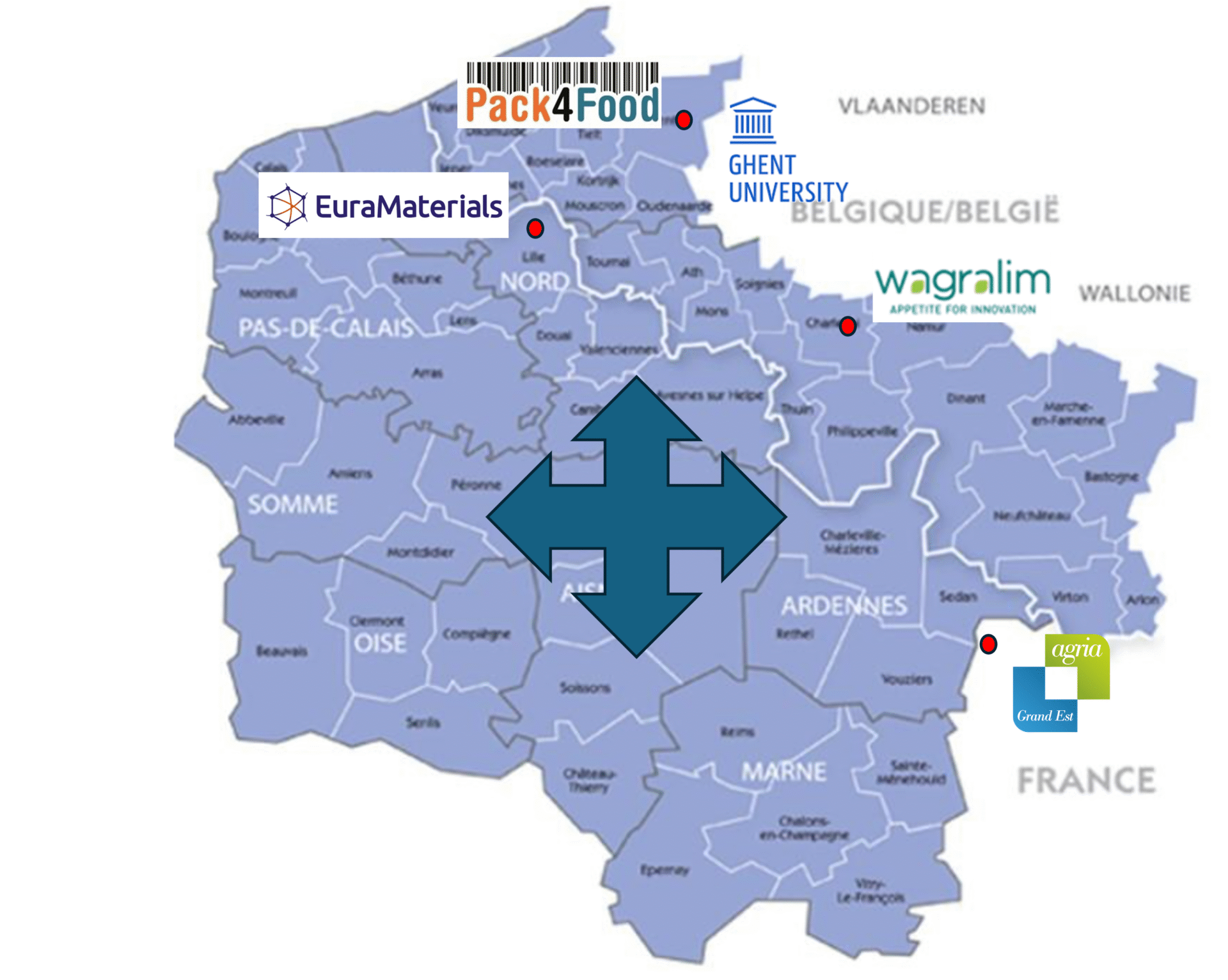
“Changes in the regulatory environment are creating uncertainty for market operators and numerous technical challenges for packaging manufacturers. To understand and address these challenges, it is essential that all stakeholders in the food packaging recycling value chain are involved. The R-EU-CYCLE project aims to raise awareness and bring together these stakeholders in our four Interreg regions of Hauts-de-France, Grand Est, Wallonia, and Flanders, and to work together on concrete solutions.”

MERLE FREDERIC
Development manager – EuraMaterials
The main
phases of the project
1
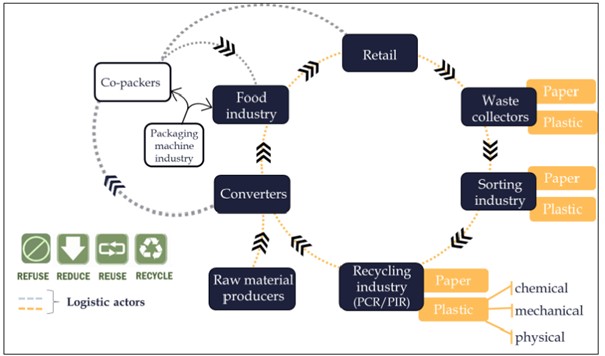
Mapping of the interregional value chains
Identifying the forces at play and understanding the issues related to the value chain of flexible food packaging recycling in the cross-border regions covered by the project.
2
Consultation with stakeholders in the value chain
Bringing together the various links in the value chain to identify the challenges to be addressed and work together on specifications for new, more recyclable packaging.
3
Development of solutions and testing in real-world conditions
Developing, within the framework of concrete business cases, packaging prototypes that comply with user specifications and the capabilities of recycling operators in the cross-border market.
For Sustainable and Recyclable plastic food packaging
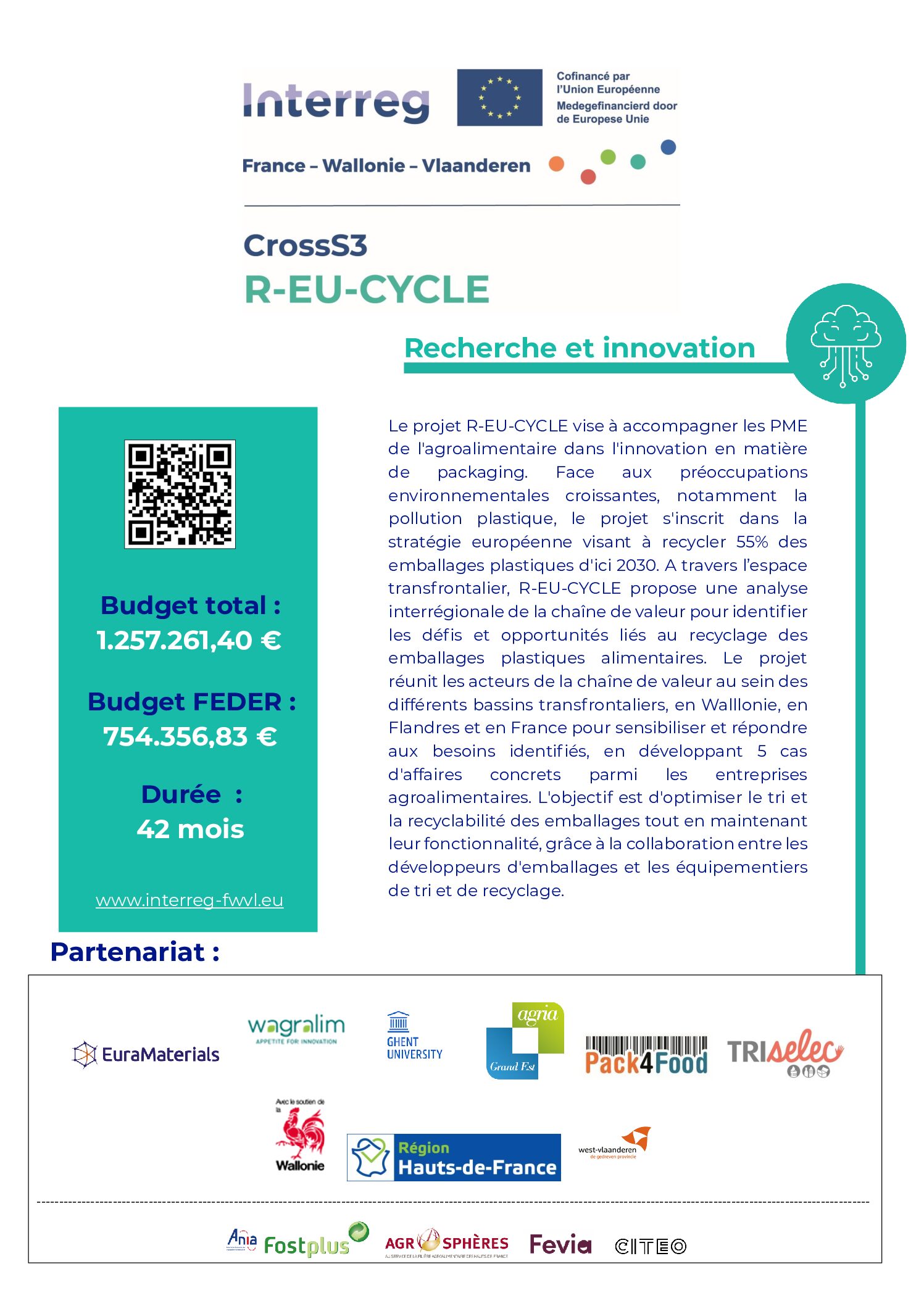
The R-EU-CYCLE project, part of the Interreg VI community initiative, aims to support SMEs in the agri-food sector in packaging innovation, which is crucial for competitiveness, food preservation, and logistics.
1.257 M€
budget from 754 K€ via the ERDF
42 months
duration of the R-EU-CYCLE project
5 partners
engaged to carry out the project
The R-EU-CYCLE commitment to Responsible Communication
The partners of the R-EU-CYCLE project are committed to integrating sustainable communication practices at all stages of the project.


Frequently asked questions
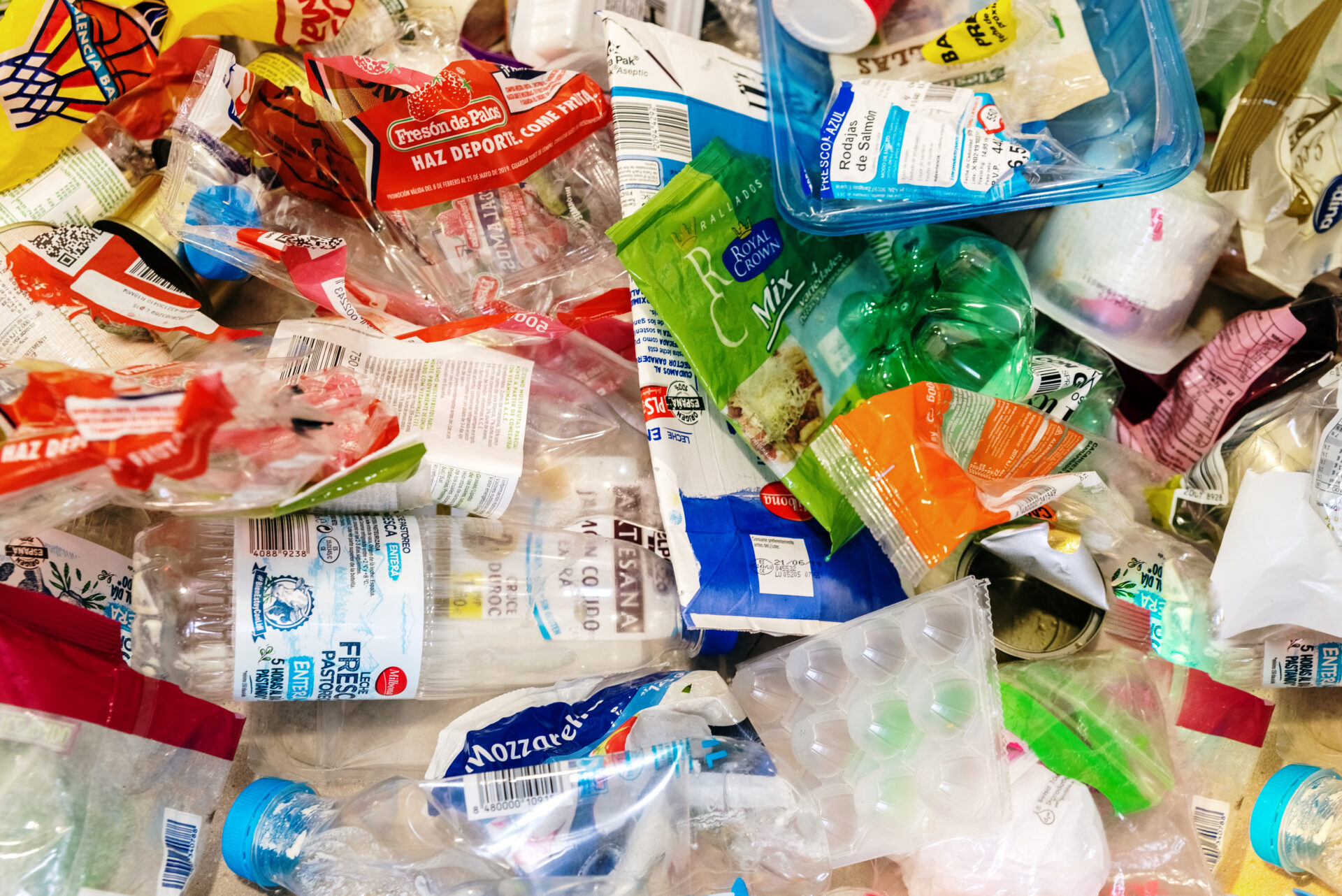
The conditions for the successful implementation of recycling plastic food packaging or packaging made from a mixture of plastic and other materials are particularly complex and can lead to confusion. Here are some answers to frequently asked questions to help you understand the challenges of the R-EU-CYCLE project.
Sometimes you have to be wary of these claims. It is not enough for packaging to be technically recyclable (because it is made of a single material, for example) to end up in the right recycling stream when it leaves the sorting center. Packaging that contains both flexible and rigid parts, black packaging, or packaging containing residues may not end up in the correct sorting bin at the end of the process. Some packaging that is recyclable on paper does not have an existing recycling channel and will end up being incinerated.
Although Belgium is performing much better than France, with a plastic recycling rate of 71% compared to 27% for the latter, there is still much progress to be made, particularly with regard to flexible food packaging, which is often complex (incorporating several non-separable materials in its composition). Improving recycling rates requires eco-design (which is part of the R-EU-CYCLE project), the adoption of new technologies in sorting centers, and, above all, raising awareness among consumers, who are a key link in the value chain, about proper sorting practices.
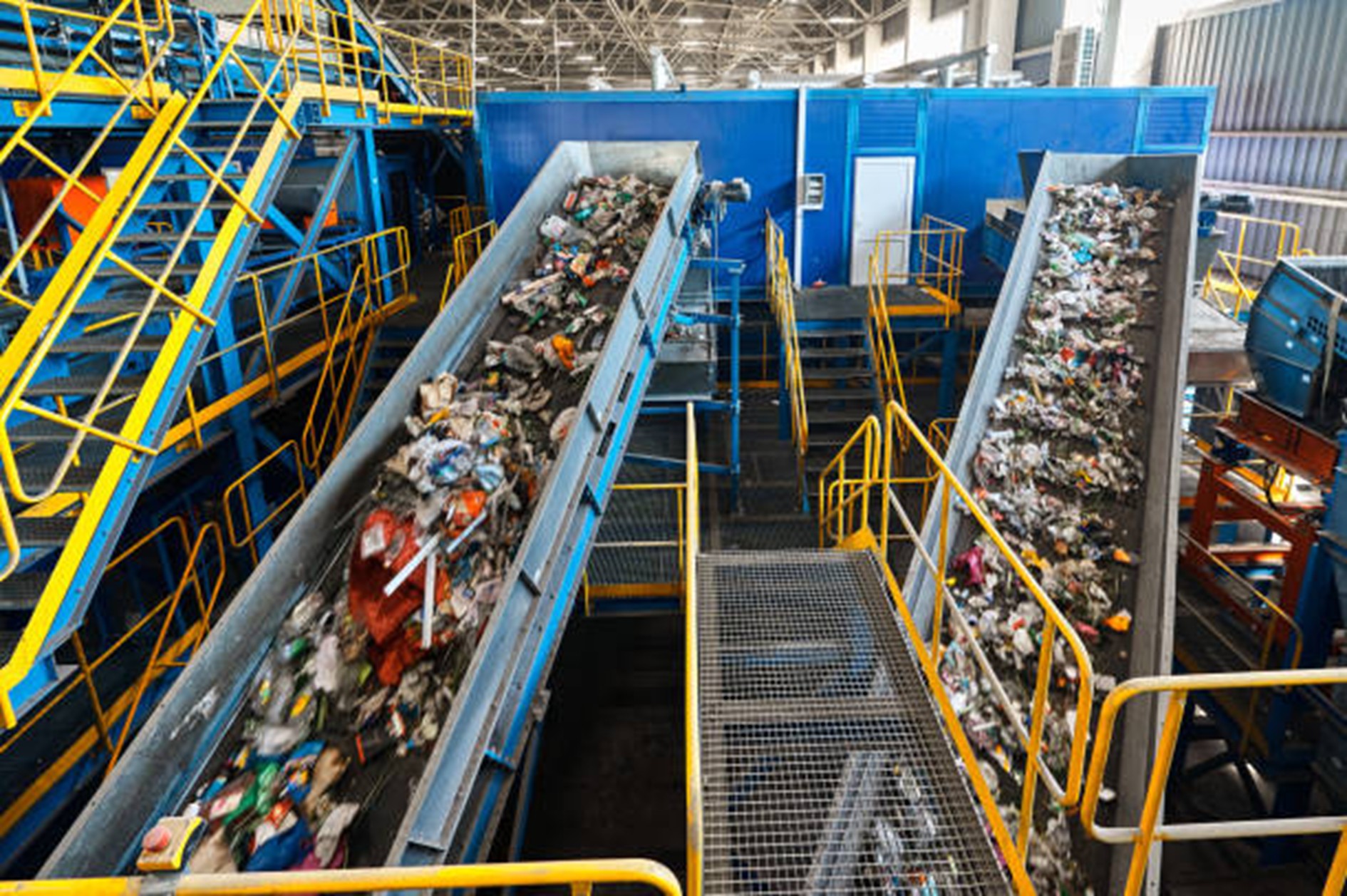
From a technical standpoint, it is multi-material packaging, as we do not currently have an effective detection method in sorting centers, and the appropriate recycling technologies are not yet developed or are still too costly. For example, it is important to note that cardboard packaging with a plastic liner to ensure watertightness is not recycled in most cases. Consumers must also be able to easily identify the composition of the packaging in order to dispose of it in the correct bin. Unfortunately, new packaging is generally brought to market without consultation with those involved in sorting and recycling.
With the extension of sorting guidelines across France, all plastic packaging can be disposed of in the recycling bin along with cardboard packaging. In Belgium, the blue bag is used to recycle all plastic packaging. However, it is recommended to separate flexible parts from rigid parts, ensure that containers are emptied as much as possible, and, if possible, separate different materials. Some manufacturers design packaging that combines cardboard and plastic and can be easily separated.